MPC Wallet & Custody Infrastructure Development
MPC (multi-party computation) wallet technology splits a private key into encrypted shares held across separate parties, so no single device or person ever holds the full key. NNT Software builds MPC custody infrastructure with policy engines and role-based approvals for exchanges, funds and DAOs that need institutional-grade security without a single point of failure.





15+
In-house websites developed and managed with SEO for our group of companies
9+
Ongoing N&T Group product management and enhancement initiatives
4+
Upcoming products in development
10+
Custom client projects ongoing
Technology partnership that feels structured, fast, and dependable
We help businesses move from scattered tools and manual work to stable digital systems that are easier to manage, scale, and improve over time. Our approach blends business understanding, practical execution, and long-term support.
Custom software aligned to your workflows, approval cycles, and reporting needs.
Clear delivery process with strong communication from discovery to launch.
Solutions designed for future growth, integrations, automation, and security.
2000+
Global clients served
50+
In-house specialists
2000+
Projects delivered
300+
Startup builds supported
98%
Client retention rate
16+
Years of experience team
Explore software products built to simplify operations and accelerate growth
Explore our software products designed to simplify operations, improve efficiency, and support business growth across different use cases.





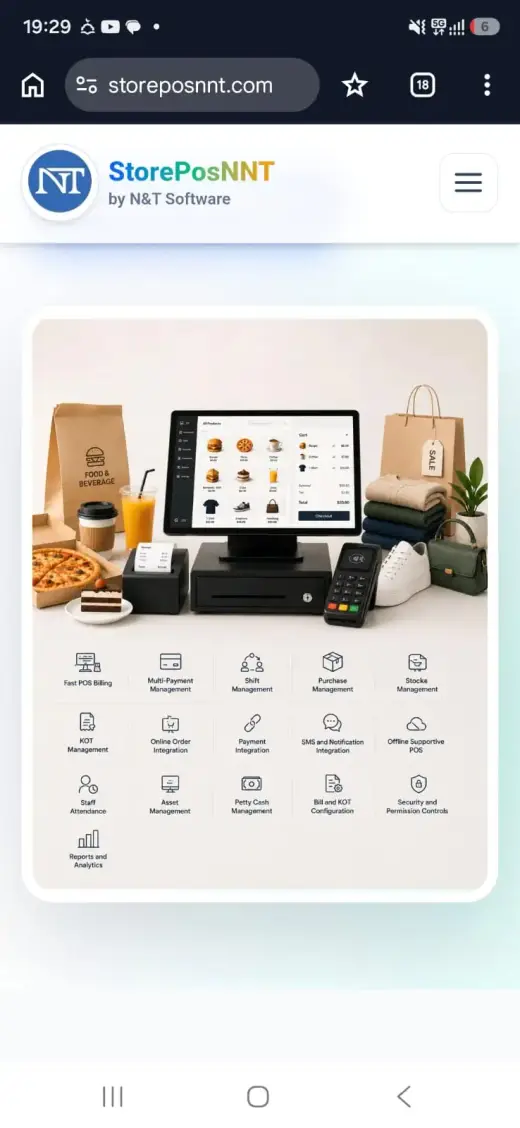

New product lines we are preparing to launch next
We are expanding our product ecosystem with focused solutions designed for operations, administration, and business growth across multiple industries.
CRM Management
Smarter lead tracking, team follow-ups, sales visibility, and customer relationship workflows in one connected system.
Hospital Management
A streamlined platform for patient records, appointments, billing, departments, and day-to-day hospital operations.
Exam Management
An organized exam workflow for scheduling, student records, result handling, reporting, and secure academic administration.
Lead Generator
A focused platform for capturing enquiries, qualifying prospects, routing leads to teams, and improving conversion through smarter follow-up workflows.
Current Project Demos
A selection of platforms we've designed and built, for reference:
What Is MPC Wallet & Custody Infrastructure Development?
Multi-party computation (MPC) splits a private key into encrypted shares held by separate parties or servers, so no single device or person ever holds the complete key and transactions are signed through a threshold signature protocol.
Compared with traditional multi-signature wallets, MPC removes on-chain multi-sig overhead, works across any blockchain regardless of native multi-sig support, and gives exchanges, funds and payment providers a cleaner path to institutional-grade custody, which is why it has become the default architecture for serious custody providers over the last few years.
How It Works
MPC custody replaces “one key, one place” with a distributed signing ceremony that never reconstructs the full private key.
Step 1
During key generation, the private key is mathematically split into multiple encrypted shares distributed across separate servers or HSMs.
Step 2
When a transaction needs signing, a threshold number of shares (for example 2 of 3) participate in a cryptographic signing protocol.
Step 3
The protocol produces a single valid signature without any party ever seeing the full private key, on-chain or off.
Step 4
Before signing occurs, the transaction passes through a policy engine that checks limits, whitelists and approval rules.
Step 5
Every signing event is logged for audit, with real-time alerts on anything outside normal patterns.
Core Features & Capabilities
Threshold signature scheme (TSS) signing
Transactions are signed collaboratively across key shares without ever reconstructing the full key.
No single point of failure
Key shares are distributed across parties and HSMs, so no one breach point can compromise custody.
Policy engine
Configurable transaction limits, address whitelisting and multi-step approval workflows enforced automatically.
Role-based access control
Granular permissions so different team members have exactly the access their role requires, nothing more.
Real-time transaction monitoring
Anomaly detection flags unusual transaction patterns before funds move, not after.
Disaster recovery & key-share backup
Documented, tested procedures for recovering key shares without ever exposing the full key.
Multi-chain support
One custody architecture works across major blockchains rather than requiring chain-specific solutions.
Audit logging
Full, tamper-evident logs of every signing event and policy decision for compliance review.
Security & Architecture
- SOC 2 and ISO 27001-aligned operational controls
- HSM-backed key-share storage where required
- Geographically distributed key shares to reduce correlated-failure risk
- Independent security review before production deployment

Our Development Process
1. Security architecture & threat-model design
We map out the specific threats your custody model needs to defend against, insider risk, remote compromise, physical access, before choosing an implementation.
2. MPC/TSS protocol implementation
Either a custom implementation or a well-vetted vendor integration, depending on your timeline and internal security requirements.
3. Policy engine & approval workflows
Transaction limits, whitelisting and multi-step approvals are configured to match your operational risk appetite.
4. Internal review & third-party audit
We conduct an internal security review and support coordinating an independent audit before go-live.
5. Compliance documentation support
Documentation aligned to SOC 2 / ISO 27001-style controls, useful for insurers and institutional partners.
6. Deployment with 24/7 monitoring
Go-live includes real-time monitoring, alerting and an incident-response runbook.
Who This Is Built For
Crypto exchanges
Build hot and cold wallet infrastructure that can scale with trading volume without concentrating risk in a single key.
Hedge funds & asset managers
Hold digital assets to a custody standard that satisfies institutional investors and auditors.
DAOs
Manage treasury funds with policy-enforced approvals instead of relying on a small group of signers.
Tokenization platforms & payment providers
Custody customer balances with the operational rigor regulators expect from a financial infrastructure provider.
Want to chat about your dream crypto project?
Schedule a free project consultation with one of our solutions architects today!
Book a project callBusiness Benefits
- Eliminates the single-point-of-failure risk of traditional key storage
- Reduces on-chain fees compared with multi-signature wallets
- Works uniformly across chains, regardless of native multi-sig support
- Meets the operational bar institutional partners and insurers expect
- Policy engine reduces reliance on manual, error-prone approval processes
Common Challenges We Solve
Institutional partners requiring proof of custody controls
SOC 2 / ISO 27001-aligned architecture and documentation give partners and insurers something concrete to evaluate.
Balancing signing speed with security
Threshold signature schemes are tuned so transactions clear quickly for normal operations while still enforcing policy checks.
Recovering access if a key-share holder is unavailable
Documented, tested disaster-recovery procedures allow share recovery without ever exposing a full private key.
Why N&T Software

Deep cryptography engineering bench, not a generic dev shop
Experience building toward institutional and insurer expectations
Ongoing monitoring and incident-response support post-launch
Multi-chain expertise so custody isn't rebuilt per blockchain
Cost & Timeline Factors
Cost depends primarily on whether you need a custom MPC/TSS implementation or a vendor-based integration, how many blockchains must be supported at launch, and the depth of the policy engine and approval workflows required. Exchanges and funds with strict internal or investor-driven security requirements typically need a more extensive audit and documentation package, which extends timeline but is usually a worthwhile trade-off for the trust it builds.
Frequently Asked Questions
MPC (multi-party computation) is a cryptographic technique that splits a private key into shares held separately, allowing transactions to be signed without ever reconstructing the full key in one place.
Multi-sig requires multiple on-chain signatures and is chain-dependent; MPC signs off-chain using threshold cryptography, works across chains uniformly, and produces a single on-chain signature, which also improves privacy and reduces fees.
Many institutional insurers now offer coverage for MPC custody setups that meet defined operational and security controls; we design infrastructure with these requirements in mind.
Yes, MPC custody infrastructure can be integrated into an existing platform's wallet layer without requiring a full rebuild.
We build toward SOC 2 and ISO 27001-aligned operational controls and can adapt the policy engine to jurisdiction-specific requirements.
This varies by risk tolerance, but a common setup uses a 2-of-3 or 3-of-5 threshold scheme; we help design the right threshold for your operational needs.
As long as the threshold number of remaining shares are available, signing continues uninterrupted, this redundancy is one of MPC's core advantages.
Yes, the policy engine supports tiered rules, such as requiring additional approvals above certain transaction thresholds.
Explore More Cryptocurrency Services
Ready to Talk About Your Project?
Share your goals with our team and we will help you plan the right roadmap for design, development, and launch.
Start your project discussion