
- Last update on October 21, 2024
- Software Development
Software development forms the core of modern business innovation. It relies on intelligence, which demands cutting-edge software development technologies.
Hence, it all boils down to how software can help companies unlock new possibilities, optimize processes, and deliver exceptional user experiences.
This is why global IT spending is projected to shoot beyond $5.26 trillion by the end of 2024; companies are investing heavily in cutting-edge technologies to stay competitive.
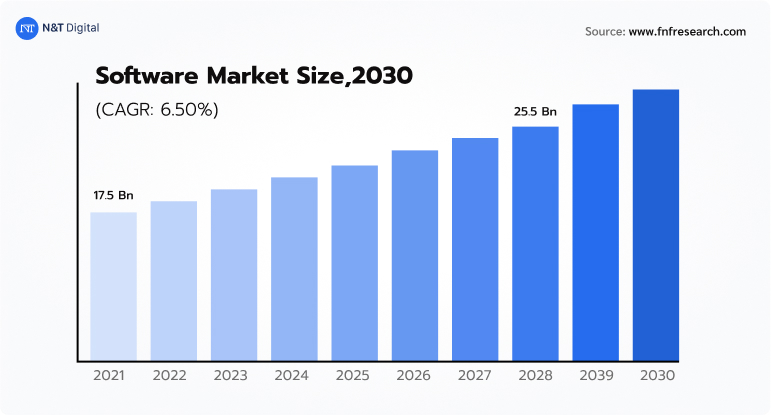
Moreover, the software development market is expected to soar beyond 25 billion in 2028
But at its core, what drives this growth?
Well, software development technologies are enabling this shift.
But what are these technologies? How do they work? And how exactly can they help businesses?
This is the post in which we’ll explore some of the basics of software technologies. We’ll also focus on practical business implementations and how modern software technologies shape growth-driven businesses.
Let’s dive in!
Top Software Development Technologies
When we speak of software development technologies, we refer to a group of tools, platforms, programming languages, frameworks, and methodologies that are useful for creating, deploying, and maintaining software applications. The type and level of technology you use can significantly define your software development cost. But it works best if you can weigh your priorities and define a scope.
The technology forms the backbone of how we create the apps and websites we use every day, from social media platforms to online banking systems. That said, the scope of software development is not about building processes but how they integrate with the business and enhance their workings.
For instance, machine learning lets you predict what customers want, and cloud computing gives you the flexibility to scale your business at lightning speed.
You can integrate data-driven insights, real-time processing, and automation to streamline operations, improve customer experiences, and maintain a competitive edge.
Looking to use modern-day software technology for your business?
Explore our services that will take you a step forward.
Explore NowLet’s break it down and explain it in detail.
5G Expansion
5G is not just a faster network; it’s a paradigm shift.
In recent times, 5G expansion has transformed industries with ultra-fast data transfer, low latency, and massive device connectivity. It continues to expand to provide software technology with more innovative, faster, and connected ecosystems.
How your business can use 5G expansion for software development
5G expansion in software development will lead to reduced latency and enhanced bandwidth, helping businesses unlock major opportunities to drive innovation.
- Building Real-Time Applications: From immersive VR training simulations to remote robotic control, 5G expansion with software reacts instantly to bridge the gap between the physical and digital worlds.
- Leveraging IoT Ecosystem Growth: 5G’s ultra-low latency and high speed make it ideal for expanding IoT devices. It is best used to deploy a large number of connected devices, from sensors in smart cities to automation in agriculture.
- Cloud-Native Performance: With 5G’s minimal lag, your cloud-based applications get a faster platform to run smoothly as if they were installed locally. It gives users a seamless experience.
Examples of 5G Technology
See a recent example of software development using 5G technology.
Smart CitiesCities like Barcelona and Shanghai are leading the charge using 5G to power smart city solutions.
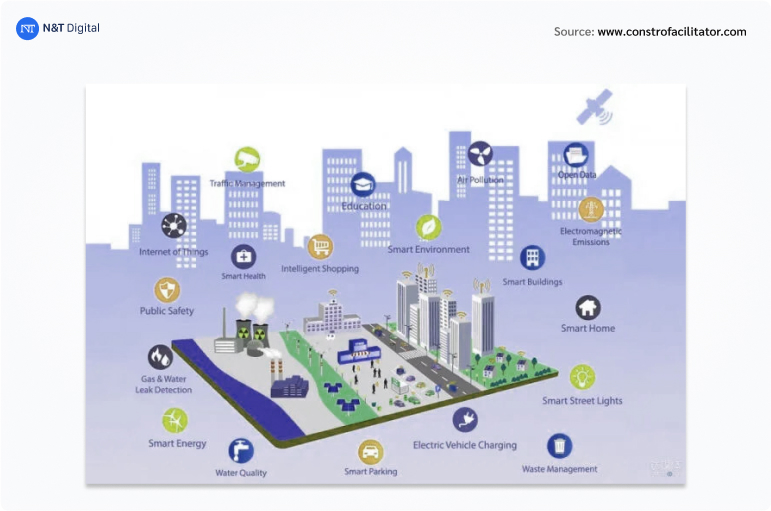
They use intelligent traffic lights, connected public services, and IoT-powered utilities, which are backed by software, creating more efficient urban living environments.
TeslaTesla uses 5G technology to enhance autonomous driving capabilities.
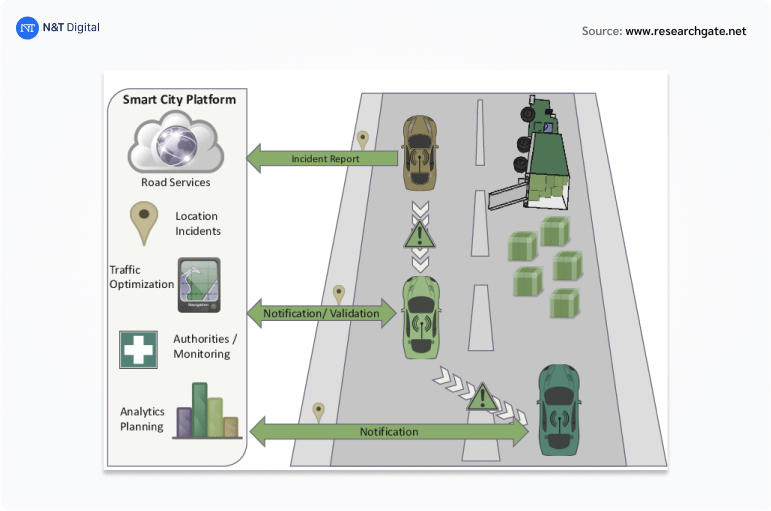
With 5G, vehicles can communicate with each other and infrastructure (like traffic lights or road sensors) in real-time, significantly improving decision-making, safety, and traffic flow.
Low-Code Development
When it comes to software development, we usually think of high-level coding. However, the new technology of low-code development helps build applications quickly with minimal hand-coding.
Developers can take advantage of these platforms’ pre-built templates, drag-and-drop interfaces, and automation tools. It becomes easy to deploy solutions without needing a huge team of developers.
How businesses can use low-code development
Low code is helpful in building and deploying applications with minimal hand-coding. Below are some of the ways you can leverage this software development technology to speed up innovation and reduce reliance on extensive developer resources.
- Rapid Application Development: Are you looking to create an app at pace or automate workflows and manage data? If so, you will get the power you need with low-code platforms to turn ideas into operational software quickly.
- Cost-Effective Solutions: Low-code platforms can help your business reduce the cost to develop software for a project, as you’ll need fewer developers. Employees from non-technical departments (e.g., marketing or HR) can also contribute to building apps.
Examples of Businesses Using Low-Code Development
UnileverUnilever used Mendix, a low-code platform, to streamline internal processes by developing over 30 applications that helped manage production lines and supply chains.
This allowed them to reduce time-to-market for new products by building and deploying solutions faster.
Schneider ElectricSchneider Electric leveraged OutSystems, a low-code platform, to create a customer-facing mobile app that monitors energy consumption in real-time.
By enabling rapid updates, Schneider Electric reduced development time and improved user engagement.
AR and VR in E-commerce
Augmented Reality (AR) and Virtual Reality (VR) are changing the way e-commerce businesses function. With AR and VR for software development, businesses in e-commerce can create immersive shopping experiences. It helps overcome the limitation of traditional online retail, which is to choose products based only on pictures and videos.
Implementing AR and VR for software development allows customers to visualize products in real-time within their environment. For instance, they can try on virtual clothing or even explore virtual showrooms from the comfort of their homes.
How businesses can use AR and VR for software development
The application of AR and VR in software development is applicable to a range of industries in different ways mentioned below.
- Virtual Try-On Features: Clothing retailers are leveraging AR to enable customers to see how clothes, accessories, or makeup would look on them before making a purchase.
- Virtual Product Visualization: Home décor and furniture retailers offer customers the ability to place virtual versions of products in their homes through AR apps.
- Interactive VR Showrooms: Businesses can build virtual showrooms, allowing customers to walk through and explore products in a fully immersive environment.
Examples
Some well-known businesses are already using Augmented Reality (AR) and Virtual Reality (VR) in retail.
IKEAIKEA uses 5G-powered AR applications that allow customers to visualize how furniture will look in their homes before purchasing.

With 5G, the AR experience becomes smoother, more responsive, and visually rich, enabling real-time interactions with high-resolution 3D models.
L’Oréal’s Virtual Try-On“L’Oréal uses AR to let customers virtually try on makeup products.

This provides users with a more personalized shopping experience
AI as an Everyday Tool
Artificial Intelligence (AI) is no longer about futuristic concepts as it is slowly becoming a key part of daily business operations.
Using it as a software development technology helps automate repetitive tasks, enhance customer experiences, and generate insights from large datasets.
How businesses use AI as an everyday tool in software development
- Customer Service Automation: AI chatbots and virtual assistants are becoming the go-to tools for improving customer support that can answer frequently asked questions, process orders, and handle inquiries 24/7.
- Data-Driven Decision-Making: AI, as an everyday tool in software development, can power analytics tools to enable data processing. It can uncover patterns and trends that help make informed decisions.
- Marketing Personalization: Use AI to create personalized marketing content by analyzing user behavior and preferences. This results in highly targeted campaigns that improve conversion rates and enhance customer satisfaction.
Elevate your business strategies with powerful AI integration.
Learn how Artificial Intelligence can help you stay ahead of the competition and achieve sustainable growth.
Learn MoreAI tools like UiPath and Blue Prism automate mundane tasks such as data entry, scheduling, and document processing, freeing employees to focus on higher-value work.
Zendesk AIZendesk uses AI to categorize automatically and route customer support tickets, improving response times and ensuring the right agent is assigned to the right issue.
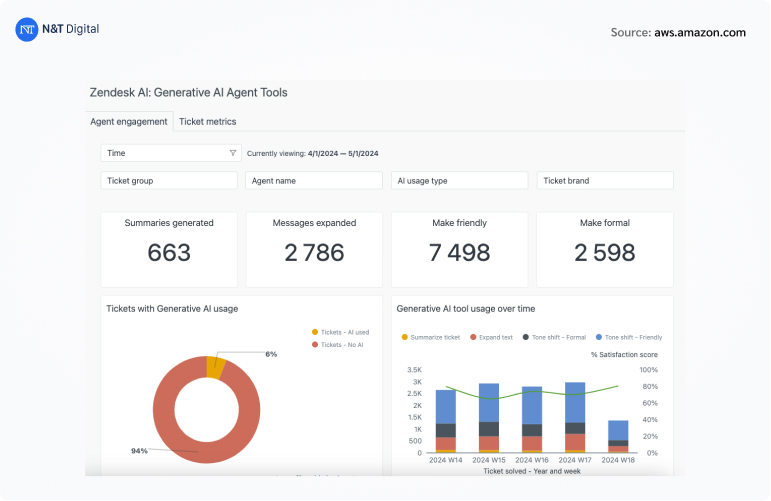
This helps streamline customer service operations and boost overall efficiency.
Google PhotosPhotos use AI and facial recognition to automatically organize and tag images, grouping pictures of the same person.
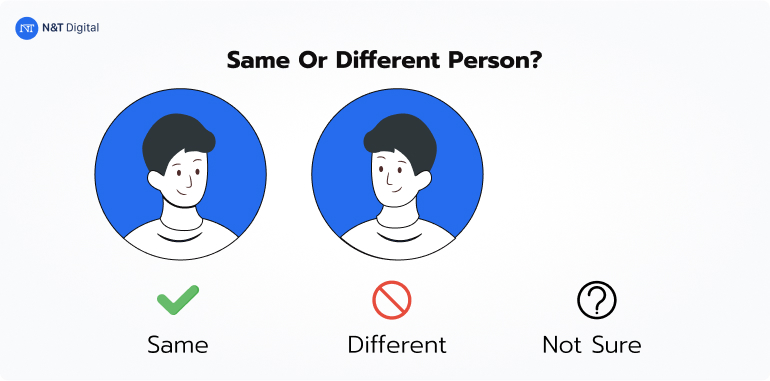
It can also identify objects, locations and events so users can locate specific memories.
FinOps and GreenOps
FinOps (Financial Operations) and GreenOps (Green Operations) are two different methodologies that help optimize cloud resource usage and reduce environmental impact.
FinOps focuses on managing cloud costs. GreenOps promotes sustainable practices by minimizing carbon footprints in cloud computing.
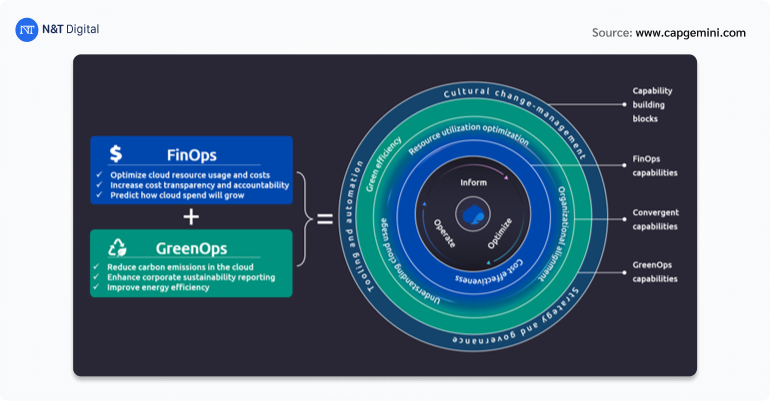
Together, they are leveraged in software development as a holistic approach to optimizing resource utilization, reducing environmental impact, and aligning technology decisions.
Adopting this approach will help developers build efficient, cost-effective solutions to minimize energy consumption and carbon emissions throughout the software lifecycle.
How businesses can use FinOps and GreenOps in software development
Businesses can use FinOps and GreenOps in software development by adopting cost-aware architectures, implementing green coding practices, and ensuring sustainable deployment and scaling.
- Cost Optimization: FinOps helps businesses track cloud spending and implement cost-effective strategies without compromising performance.
- Sustainability in IT: GreenOps encourages businesses to adopt green IT practices, such as optimizing cloud workloads to reduce energy consumption. They can also choose data centers powered by renewable energy to minimize unnecessary computational tasks.
- Green coding practices: Let your software development team integrate GreenOps principles throughout the coding process. For that, they’ll have to optimize algorithms to reduce processing power by using libraries and frameworks that drive efficiency and minimize unnecessary data transfers.
Examples of FinOps and GreenOps
Let’s check out some of the businesses that are implementing these modern software technologies in their product development.
Spotify’s FinOps ApproachSpotify implemented FinOps to optimize its cloud costs across its vast user base, improving financial transparency while scaling its infrastructure.
Google Cloud’s Sustainability CommitmentsGoogle Cloud offers GreenOps tools to help companies monitor carbon emissions. In turn, businesses can choose cloud options that reduce their environmental impact.
Microsoft’s GreenOpsMicrosoft Azure provides businesses with actionable insights into the sustainability of their cloud operations.
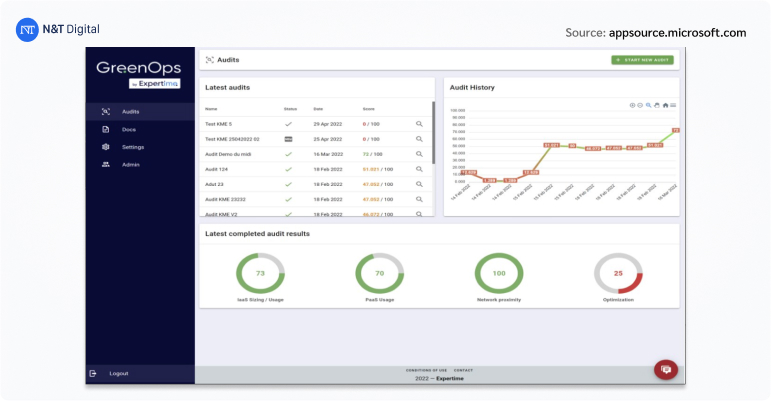
This helps IT teams align their IT infrastructure with carbon reduction goals.
Ruby
Ruby can form the backbone of software development since it is an open-source programming language. Businesses choose it for the simplicity and productivity it offers, especially when paired with the Ruby on Rails framework.
This is particularly popular for web application development, enabling businesses to develop and scale applications rapidly.
How businesses can use Ruby for software development
Leverage Ruby’s elegant syntax and powerful frameworks like Ruby on Rails to develop web applications, APIs, and automation scripts rapidly. It drives productivity and maintainability throughout the software development life cycle to provide the following.
- To Develop MVPs: Startups and businesses can use Ruby on Rails to quickly build Minimum Viable Products (MVPs), which is ideal if they want to test ideas in the market quickly.
- Building Web Applications: Ruby is used to create full-fledged web applications due to its ease of use and wide library support.
- Automation and Scripting: Highly useful in simplifying system administration, data processing, and even DevOps tasks because of Ruby’s powerful scripting capabilities and rich ecosystem of automation tools.
Examples
Here, we’ll explore some of the major companies that are using Ruby for software development.
ShopifyShopify, one of the largest e-commerce platforms, is built on Ruby on Rails. It allows businesses to create and manage online stores easily and scale quickly as their business grows.
GitHub and AirbnbWhile Ruby is often seen as a language for startups, platforms like GitHub and Airbnb prove that Ruby on Rails can handle significant scale.
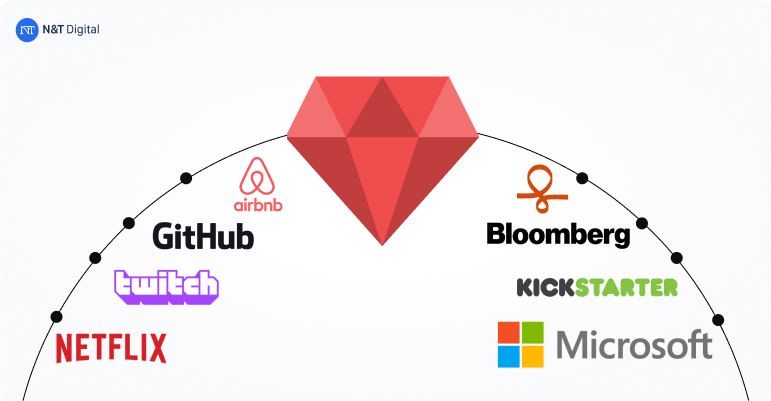
This is because of Ruby’s ability to process millions of transactions and user interactions daily.
Go (Golang)
Go, or Golang, is an open-source programming language that is ideal for high-performance, concurrent systems.
Developers specifically use it for backend development, cloud computing, and systems programming. This is due to its speed and efficiency in handling large-scale projects.
How businesses can use Go for software development
Below are some of the major ways companies can implement Go/Golang to enhance their functioning.
- Cloud Computing: Go’s speed and simplicity make it ideal for building scalable, high-performance cloud applications.
- Networking & Systems Engineering: Go excels in systems engineering, networking, and infrastructure, offering a solid foundation for creating microservices-based architectures.
- Concurrency Model: Go’s goroutines and concurrency model allow it to handle multiple processes simultaneously, making it ideal for cloud-based applications where scalability is crucial.
- Microservices Architecture: As businesses increasingly shift toward microservices architectures, Go’s lightweight nature and concurrency make it the perfect choice for developing highly efficient, distributed systems.
Example
Let’s check out some of the major ways businesses are already implementing and leveraging Golang for software development.
DockerDocker, the leading containerization platform, is built using Go.
Docker leverages Go’s concurrency and performance capabilities to manage and scale containerized applications across various environments efficiently.
SendGridSendGrid uses Go for its high-performance email-sending platform.
By implementing Go, SendGrid managed its email routing services to process billions of emails every month with low latency and high reliability.
Rust
Again, Rust is a programming language that software developers use for the security, performance, and concurrency it offers. Moreover, it is also favored for its ability to prevent memory-related bugs, making it ideal for applications where security and performance are critical.
How can businesses use Rust for software development
If you want to build high-performance and secure applications where memory safety and concurrency are crucial, go with Rust. Below are some ways companies can use Rust to perform compile-time checks and prevent common vulnerabilities.
- Security-Critical Applications: Rust is used in industries with strict security requirements, such as fintech and blockchain, where preventing memory safety issues is paramount.
- High-Performance Applications: Businesses can use rust in areas where high-performance software is required and safety is critical. This makes it suitable for systems-level programming and real-time data processing.
- Memory Safety: Rust prevents memory leaks and buffer overflows by enforcing strict memory management rules at compile time. This helps build software products, like fintech solutions, that deal with sensitive data.
Examples
Here are the top companies using Rust technology to build their backend.
DiscordDiscord is a popular chat application that rewrote parts of its backend in Rust to handle millions of concurrent users and messages.
It uses Rust to reduce CPU usage and improve the efficiency of its chat system. By delivering messages faster, it boosts user experience.
Mozilla FirefoxThe well-known Mozilla Firefox browser uses Rust in its Servo engine to provide high performance and safety when rendering web pages.
The memory safety features of Rust help prevent security vulnerabilities that are common in browser engines.
Web 3.0 Evolution
Web 3.0 is often described as the next generation of the internet. It focuses on decentralization, enhanced privacy, and giving users control over their data.
It leverages blockchain technology to provide more transparency, peer-to-peer interactions, and
Contracts. Overall, this changes how your business builds online services and applications.
How businesses can use Web 3.0 for Software Development
Below are some of the ways how businesses can leverage Web 3.0 for software development with an intent to enhance transparency, security, and user control.
- Decentralized Applications (dApps): Businesses can build decentralized platforms, which are software or apps that provide users with more security and control over their data.
- Tokenization and NFTs: Web 3.0 enables businesses to create unique digital assets and monetize them through tokens or NFTs (Non-Fungible Tokens).
- Smart Contracts: Software can be built to integrate self-executing contracts, simplify transactions, and automate processes without intermediaries.
Example
Here’s a list of businesses that have successfully leveraged Web 3.0 to build a successful company.
UniswapPlatforms like Uniswap use Web 3.0’s decentralized infrastructure to enable peer-to-peer cryptocurrency exchanges without a central authority, leveraging blockchain for transparency and security.
Internet of Behavior (IoB)
The Internet of Behavior (IoB) is a technology concept that involves collecting data about online activities, such as websites visited, purchases made, and time spent on specific pages. This data is further used to understand our habits and predict our future behavior.
For a software development company, IoB takes the form of a SaaS product with algorithms to personalize ads and customer service. It also helps create new products and services and can be used to address social issues like poverty and inequality.
How businesses can use IOB for software development
The Internet of Behavior (IoB) empowers enterprises to build software systems to help their users predict customer needs, optimize marketing strategies, and create more personalized user experiences. Let’s explore some more briefly.
- Personalized Marketing: Businesses can collect and analyze customer behavior across multiple platforms, such as websites, apps, and social media. This will help them tailor their marketing strategies for each individual and offer personalized promotions.
- Behavioral Analytics for Decision-Making: IoB can provide deep insights into customer patterns and behaviors. By tracking how customers interact with digital products and services, businesses can make more informed decisions.
- Real-Time Feedback: Businesses can use IoB for real-time adjustments, ensuring a more proactive approach to customer engagement.
Let’s explore major businesses that use IOB as a part of their technology product.
AmazonIt uses IoB to track and analyze user behavior on its platform, including browsing history, search patterns, and purchase history.
This allows Amazon to offer highly personalized product recommendations and targeted ads for maximum conversion.
Microservice Architecture
Microservice architecture breaks down applications into small, independent services, enabling more flexibility, scalability, and faster deployments.
This decomposition allows for independent development, deployment, and maintenance, leading to faster deployment and improved agility.
It can then develop, deploy, and maintain independently to ensure faster deployment.
Significant uses of microservice architecture in business
Microservice architecture is trendy in businesses that prefer agile development. It enables teams to manage individual components more efficiently and deliver updates or features without impacting the entire system.
Scalable DevelopmentMicroservices let your business scale individual application components independently. There is no need to scale the entire system; rather, the focus can be on scaling only the services that experience high demand.
Fault IsolationMicroservices ensure that if one component fails, it doesn’t cause the entire system to crash. It does so by isolating faults within specific services to minimize software downtime and troubleshoot issues faster.
Technology FlexibilityMicroservices use different technologies and programming languages for different services within the same system. For example, a company might choose to use Node.js for real-time data services while using Java for processing large data sets.
NetflixNetflix famously transitioned from a monolithic architecture to microservices to better manage its rapidly growing streaming platform.
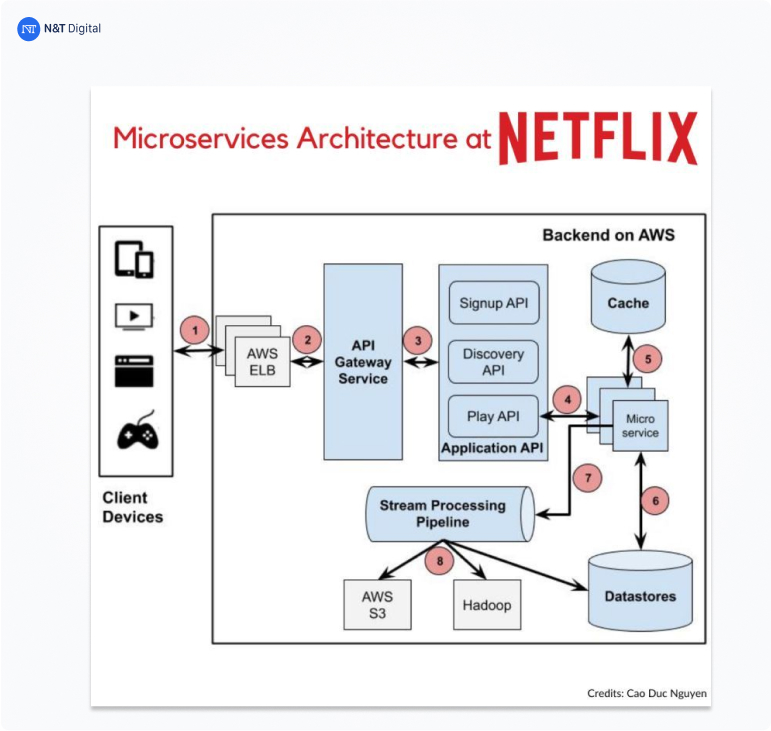
Breaking its services into independent microservices (such as user profiles, content recommendations, and video streaming) enables Netflix to update and deploy features without impacting the system.
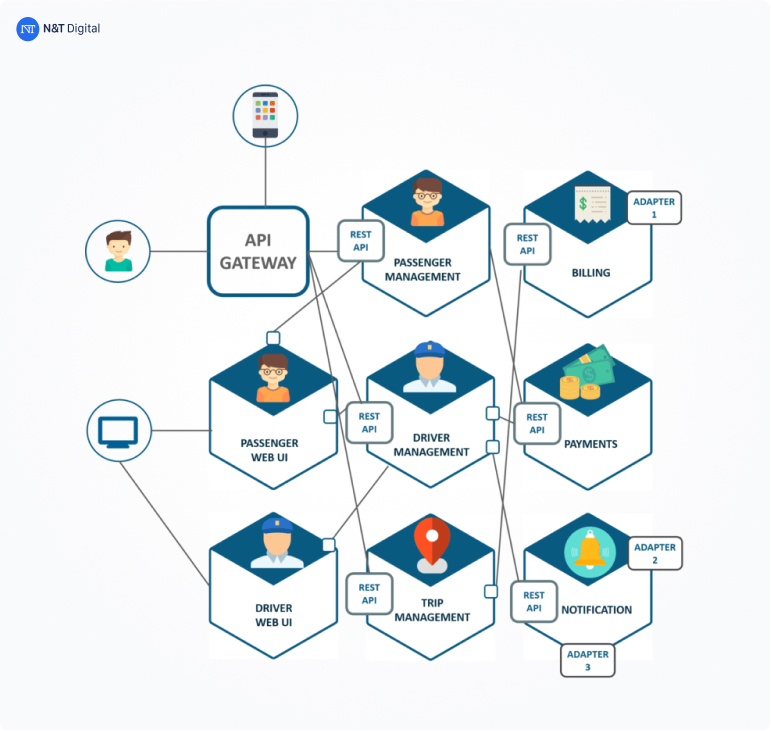
Uber moved to microservices to support its dynamic and growing business.
This meant that Uber could scale specific services based on demand, as thousands of independent services handle tasks such as real-time location tracking, ride matching, payment processing, and notifications.
Cybersecurity with DevSecOps
DevSecOps integrates security into the DevOps pipeline throughout the development lifecycle. It enables proactive threat identification and improved system protection.
With cybersecurity DevSecOps, you can automate security checks, perform vulnerability assessments, and ensure compliance measures in software development. This is one way to identify and address potential threats and proactively reduce the risk of breaches.
How businesses can use Cybersecurity with DevSecOps for software development
DevSecOps helps businesses ensure that security is not a bottleneck but an integral part of the development process. It combines automated security protocols with continuous integration and deployment workflows for faster detection and resolution of vulnerabilities.
- Automated Security Checks: Integrate security tools to perform real-time vulnerability scanning, code analysis, and penetration testing during the development and deployment process.
- Shift-Left Security: Implement early-stage security steps during the development phase to determine and mitigate risks before they get to the production environments.
- Compliance and Auditability: Integrate audit-ready security checks and reporting across the development pipeline to ensure compliance with industry standards (e.g., GDPR, HIPAA).
Etsy integrates security within its CI/CD process to automate vulnerability detection and mitigation as part of its development workflow.
This enables faster and safer releases without compromising user trust.
Capital OneUsing DevSecOps, Capital One embeds security within its AWS cloud infrastructure.
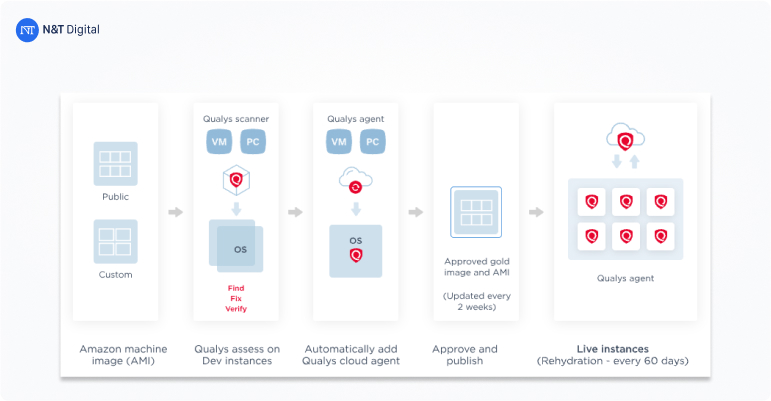
This approach ensures that automated compliance checks and continuous monitoring are in place for the safety of sensitive financial data and transactions.
Conclusion
As we inch closer to 2025, the above technologies are set to revolutionize software development.
Keep an eye on technologies like Web 3.0, IoB, Microservice Architecture, and DevSecOps, as they can significantly enhance agility, scalability, security, and personalization for businesses.
From decentralized applications and behavior-driven insights to modular architectures and embedded security, these software development technologies are reimagining the way how companies develop, deploy, and maintain their software systems.
Each approach brings unique benefits, helping businesses stay competitive and adaptable amid growing competition.
The examples highlighting the use of modern-day technologies by Netflix, Amazon, and Capital One show why leveraging these technologies should be a top priority for your tech goals. Adopting these innovations can future-proof your business and deliver higher value to customers.
Opting for custom software development services can provide the best solution. Developers and business planners can identify the most suitable technologies and tech stack for your project.
Ready to elevate your business with innovative software solutions that drive growth and efficiency?
Let us help you harness cutting-edge technology to reach new heights.
Let’s Get Started






15+
In-house websites developed and managed with SEO for our group of companies
9+
Ongoing N&T Group product management and enhancement initiatives
4+
Upcoming products in development
10+
Custom client projects ongoing
Why You choose N&T software as technology partner
Technology partnership that feels structured, fast, and dependable
We help businesses move from scattered tools and manual work to stable digital systems that are easier to manage, scale, and improve over time. Our approach blends business understanding, practical execution, and long-term support.
Custom software aligned to your workflows, approval cycles, and reporting needs.
Clear delivery process with strong communication from discovery to launch.
Solutions designed for future growth, integrations, automation, and security.
2000+
Global clients served
50+
In-house specialists
2000+
Projects delivered
300+
Startup builds supported
98%
Client retention rate
16+
Years of experience team
Discuss your software projectBuilt for startups, SMEs, and enterprise teams.
Inhouse Development Portfolio
Explore software products built to simplify operations and accelerate growth
Explore our software products designed to simplify operations, improve efficiency, and support business growth across different use cases.





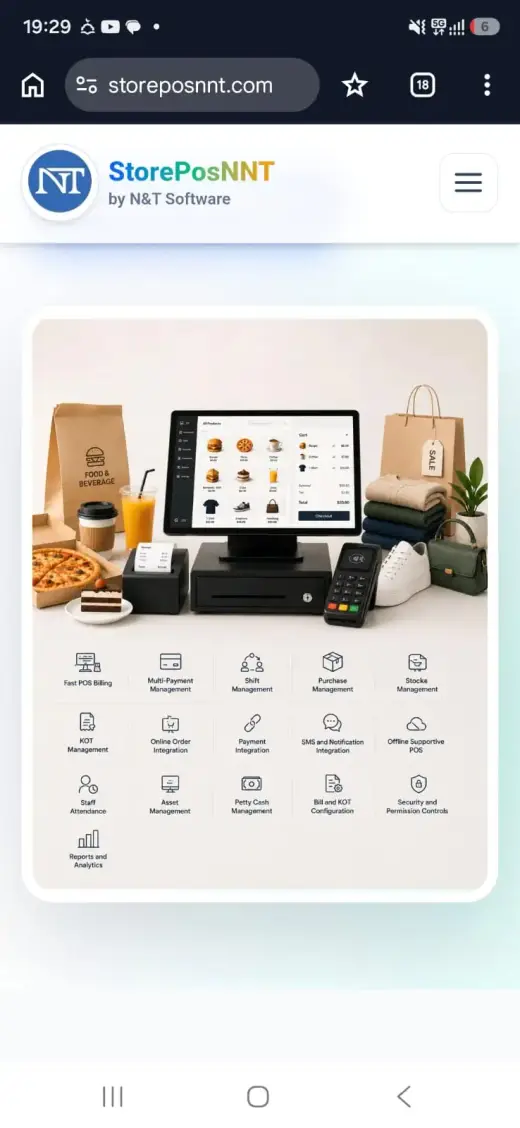

In Features Our Product Is Coming
New product lines we are preparing to launch next
We are expanding our product ecosystem with focused solutions designed for operations, administration, and business growth across multiple industries.
01
CRM Management
Smarter lead tracking, team follow-ups, sales visibility, and customer relationship workflows in one connected system.
02
Hospital Management
A streamlined platform for patient records, appointments, billing, departments, and day-to-day hospital operations.
03
Exam Management
An organized exam workflow for scheduling, student records, result handling, reporting, and secure academic administration.
04
Lead Generator
A focused platform for capturing enquiries, qualifying prospects, routing leads to teams, and improving conversion through smarter follow-up workflows.
Project Showcase
Current Project Demos
A selection of platforms we've designed and built, for reference:
Ready to Talk About Your Project?
Share your goals with our team and we will help you plan the right roadmap for design, development, and launch.
Start your project discussion
Copyright 2026 N & T Software Private Limited All rights reserved.